
A Top-Level Domain (TLD) is the ending part of a website address (URL) that comes after the main name. It represents the highest level in the Domain Name System (DNS) and plays a key role in organizing and managing domain names online.
This guide will walk you through what TLDs are, how they work, and the different types available.
How TLDs Work
When someone types a web address like amazon.com into their browser, the DNS (Domain Name System) begins a search to find the matching server.
Because the extension is .com, the request is directed to the .com TLD server, which stores details about domain-to-IP connections. That server then provides the IP address of Amazon’s hosting server, allowing the browser to load the correct site.
In short, the TLD system ensures that users are connected to the right website whenever they enter a domain name.
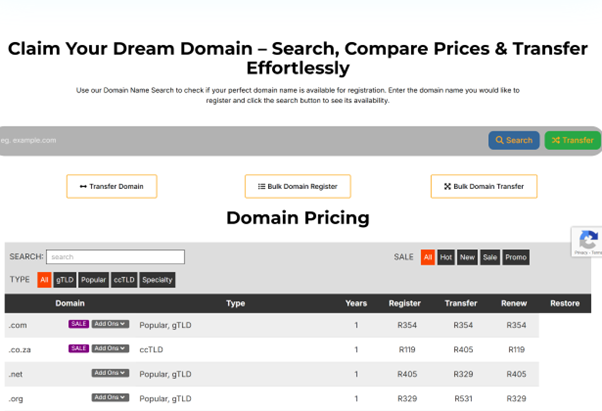
Types of Top-Level Domains (TLDs)
A URL (Uniform Resource Locator) is the address used to access a site on the Internet. In an example like www.tandohost.co.za, the suffix “.com” is the TLD.
TLDs are grouped into several categories, each serving a different purpose and helping to identify the nature or origin of a website.
- Generic Top-Level Domains (gTLDs)
These are the most widely used domain endings and usually contain three or more letters. Some of the most common gTLDs include:
- .com – Commercial use and businesses
- .org – Non-profit organizations and charities
- .net – Networking and technology websites
- .gov – Government bodies
- .edu – Educational institutions
The Internet Corporation for Assigned Names and Numbers (ICANN) manages these extensions and regularly updates the list of active and new gTLDs.
- Country Code Top-Level Domains (ccTLDs)
These are two-letter extensions that represent specific countries or territories, based on ISO 3166 country codes.
Examples include:
- .za – South Africa
- .us – United States
- .uk – United Kingdom
- .au – Australia
- .de – Germany
- .fr – France
- .jp – Japan
Unlike gTLDs, many ccTLDs have restrictions—some require you to be a citizen, resident, or have a local business presence in that country.
How to Choose and Register a Domain Name
When picking your domain name, choose one that is:
- Memorable and easy to type
- Short and relevant to your brand
- Paired with the right TLD for your audience
Most domain registrars provide search tools to check availability and help you register your chosen name.
Geographic Top-Level Domains (geoTLDs)
GeoTLDs are a special subset of gTLDs that are linked to regions, cultures, or languages. They emphasize geographic or cultural connections in a domain name.
Examples include:
- .joburg – Johannesburg
- .africa – African continent
Although technically considered gTLDs, they are listed and managed by ICANN just like other domains.

